
Why Your Dog Acts Differently Outside Than at Home
At home, your dog is calm. He listens. He seems responsive. You might even think: Actually, he can do it.
And then you go outside.
Suddenly, everything is different. The dog is excited. He pulls. He scans his surroundings. He reacts to every sound. You have to repeat commands several times. And even then, it’s not certain that he’s getting the message at all.
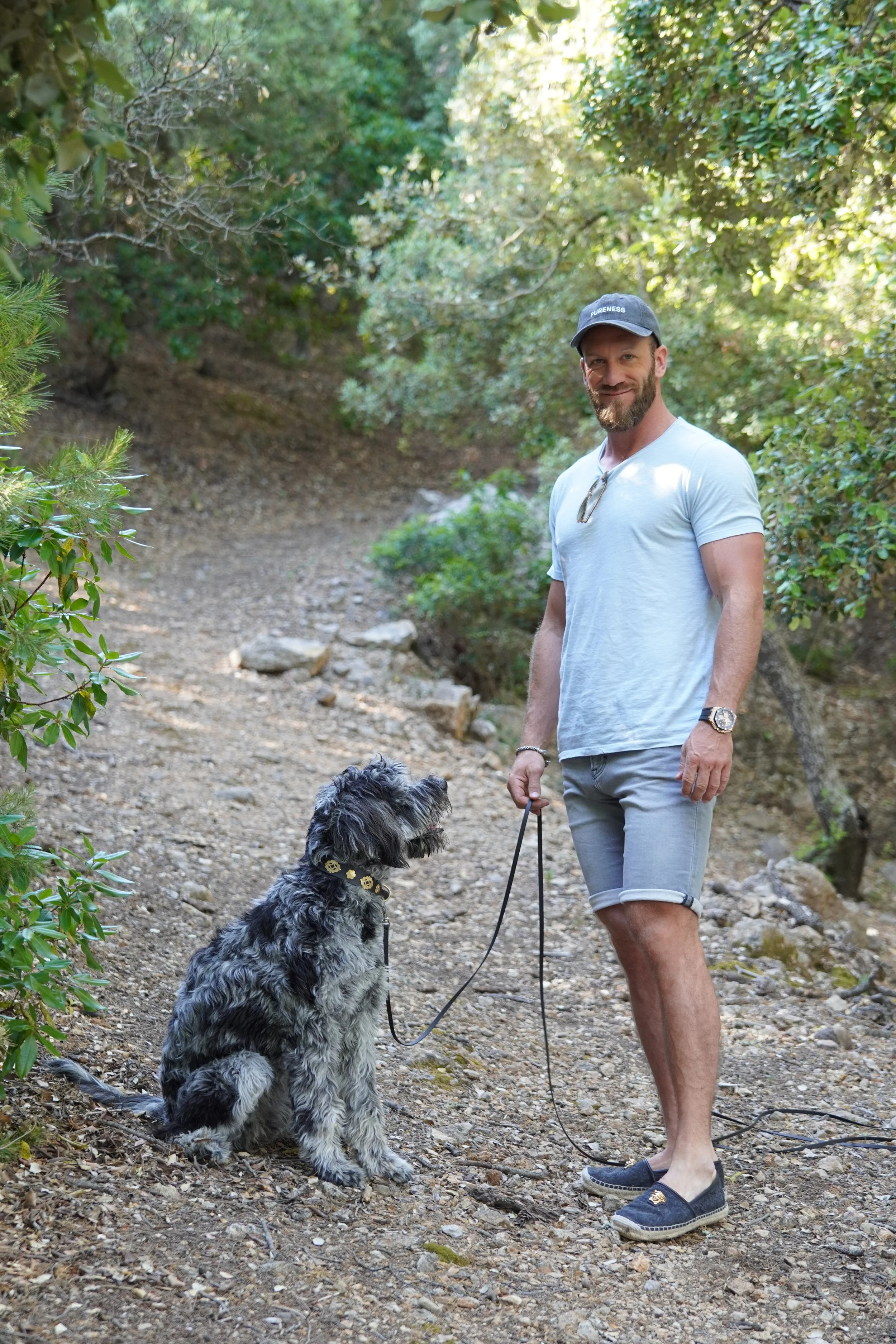
If this sounds familiar to you, you're not alone.
A lot of dog owners experience exactly that.
The dog is relatively well-behaved indoors but is like a different dog outdoors.
And there’s a logical reason for that.
At home, the world is simple
At home, not much usually happens.
No strange dogs run through your living room.
No cats suddenly dart by.
No deer cross your path.
No strangers show up unexpectedly.
No new smells. No major excitement. No real outdoor life.
At home, much is predictable. The surroundings are familiar. Stimuli are limited. The dog knows the routines. Its nervous system has to process significantly less information.
That’s why a dog often seems much calmer at home than it actually is outside.
That doesn’t automatically mean the dog is really well-trained.
It often simply means that the environment isn’t demanding much of the dog at that moment.
The truth comes out in the open
As soon as you step outside, everything changes.
The world opens up.
Exciting.
Full of movement.
Uncontrollable.
Smells everywhere. Noises everywhere. Movement everywhere. Possibilities everywhere.
And that’s exactly where you’ll see how stable your dog really is.
Not in the quiet apartment. But in the real world.
Outdoors is where you’ll see if your dog can still rely on you even when distracted.
Whether he sticks to agreements even when things get exciting.
Whether your communication really gets through.
Whether you can still reach him internally when his nervous system is already revving up.
That's exactly why being outside is such a sobering experience for many dog owners. Because it reveals what was still hidden at home.
The problem often doesn't start outside, but even before that
One very important point is often overlooked. Many people think the problem only starts when the dog is outside.
When he pulls on the leash.
When he freaks out when he encounters other dogs.
When he’s excited.
When he stops listening.
But very often, the problem starts much earlier.
Namely, the moment your dog realizes you’re going outside.
Even then, a switch flips for many dogs.
Excitement builds.
Anticipation builds.
The nervous system kicks into high gear.
Suddenly, the dog is no longer calm—mentally, it’s already on its way.
And that’s exactly what matters. Because if your dog approaches the door with a tense nervous system, things won’t automatically get better once it’s outside.
Then you’ll start the walk already feeling restless. And given that, it’s often unrealistic to expect a relaxed walk on a leash, peace and quiet, or pleasant encounters.
The walk doesn't start right outside the front door
That’s one of the most important ideas of all.
The walk doesn’t just start once you’re outside. It begins the moment you decide to go out with your dog.
From that moment on, an inner process is already underway.
For you and for your dog.
If your dog gets worked up, becomes frantic, whines, runs around, pushes, or can barely control itself the moment you reach for the leash, then that’s not just excitement.
It’s often already a sign that the entire process is too emotionally charged.
And that’s exactly where you need to start.
Not once you’re already out on the path.
But before that.
Many people try the wrong thing at the wrong time
A common mistake is that people first let the dog out somehow, let him pull on the leash, let him run around, or hope that he’ll burn off some energy outside first. And only then do they try to start doing exercises with him.
But if your dog behaves so differently at home and outside, that approach usually doesn’t make sense.
Because then you’re not training the actual tipping point. The crucial moment is precisely the transition.
The shift from inside to outside.
The moment when the excitement begins.
The sequence from fetching the leash to leaving the apartment.
If you don't practice this exact moment properly, you'll often skip over the most important part.
Clear agreements are the foundation
To help a dog become calmer and more responsive outdoors, it’s not simply a matter of giving more commands. First, the dog needs clear guidelines.
The dog must learn that going outside doesn’t mean that a state of emergency has immediately begun.
The dog must learn that even when excited, it should still look to you for guidance.
The dog must learn that the sequence of events isn’t dictated by its excitement, but by your clarity.
It starts with you.
With how you communicate.
With your inner calm.
With your consistency.
With your timing.
With your willingness not to simply go along with things on autopilot, but to consciously guide the process.
Dogs learn through repetition, not through hope
Many people hope that things will just get better eventually.
That the dog will calm down over time.
That he’ll eventually get used to it.
But that’s not usually how it works.
A dog learns primarily through repetition.
Through clear routines.
Through reliable patterns.
Through the same message over and over again.
So if your dog gets worked up when you go outside, it’s worth training this exact sequence.
Not just once.
But several times in a row.
Very deliberately.
Very precisely.
In very small steps.
Practice the routine, not just the walk
That’s the real game-changer.
Turn the whole process itself into a training session.
So not just the walk outside, but everything leading up to it.
From the moment you start getting ready.
Right up until the moment you’re standing at the door.
And if necessary, even just up to that point.
Maybe you’ll pick up the leash and have your dog stay calm while you do so.
Maybe you’ll walk to the door and wait again.
Maybe you’ll get dressed and sit down again.
Maybe you’ll walk to the door, open it briefly, and close it again.
Maybe you’ll leave the apartment and go right back in.
Why?
Because your dog needs to learn that this sequence of events doesn’t automatically mean excitement.
He needs to learn that staying calm is possible there, too.
That the transition doesn’t have to be hectic.
That you’re in control of this moment.
Work in small, individual steps
Accuracy is extremely important here.
Many are too rough.
They want too much too quickly.
But your dog will learn better if you break down the individual steps clearly.
For example:
You stand up.
You put on your shoes.
You pick up the leash.
You call your dog or calmly bring him over.
You walk to the door.
You wait.
You open the door.
You walk outside.
You close the door.
Each and every one of these steps can trigger excitement. And that’s exactly why you should look at each step individually.
Where does your dog lose it?
At what moment does the tension rise?
Where does the pushing start?
Where does he lose his composure?
That’s where you start. And that’s where you repeat the process until that exact part becomes calmer.
Why this is so important from a psychological perspective
A dog with a high arousal level learns less effectively. This is a key point.
When the nervous system is already under stress, it becomes harder to focus.
Stimuli become more intense.
Reactions become faster.
Responsiveness decreases.
The dog isn't in a state where it can listen particularly well, hold back, or respond sensitively to you. That's why so many walks don't fail because of the leash outside. They fail internally even before that happens.
Because the dog has already emotionally associated the walk with a cue for excitement.
And because people often unconsciously reinforce this aspect over and over again in the same way.
Dogs don't just remember places; they also remember states
It goes a bit deeper than that.
A dog doesn’t just learn: “Now we’re going outside.”
It often also learns: “Going outside means getting excited.”
A leash means excitement.
A door means an explosion.
A walk means maximum external focus instead of an internal connection.
If this state is repeated often enough, it becomes a pattern.
An internal track.
The dog doesn’t consciously switch gears.
Its system switches automatically.
And that’s exactly why it’s not enough to simply talk more or give more commands outside. You have to change the pattern. You have to create a new internal process.
Why People Themselves Are Often the Source of the Unease
That’s part of it, too.
Many dog owners aren’t really calm themselves before the walk.
They’re in a hurry.
They just want to get going.
Their minds are already outside.
They react with irritation to the dog’s behavior.
Or they unconsciously create a lot of tension in the process themselves.
Grabbing the leash too quickly.
Hectic movements.
Impatience.
Repeat.
Pushing.
The dog senses all of this.
And that’s exactly what often makes the situation even more tense. That’s why it’s not just about training the dog. It’s also about you becoming more mindful, calmer, and more structured.
Calm does not come from waiting, but from leadership
Some people hope that the dog will simply calm down at some point.
But true calm usually doesn’t just happen on its own.
It comes from a clearly defined framework.
Through repetition.
Through predictability.
Through structure.
Through consistent, calm routines.
The dog shouldn’t just somehow become calm.
It should learn what calm looks like within this routine.
That is the real turning point in the medium and long term
If you practice this transition properly, it doesn't just change the start of the walk. It often changes everything else, too.
After all, a dog that leaves the house in a calmer and more composed state is usually much easier to handle once outside.
Leash walking becomes easier.
Interactions improve.
Overall tension decreases.
The dog spends less time in the tunnel.
More focused on you.
More oriented.
More responsive to your lead.
And that’s exactly what pays off enormously in the long run.
Not through a trick.
But through solid foundational work.
Conclusion
If your dog is calm at home but acts like a completely different dog when outside, that's no coincidence.
At home, there are usually few distractions and few real challenges.
Outdoors, you can see just how resilient your dog really is when faced with stimuli.
The key point here is often not the walk itself, but what happens leading up to it.
If your dog gets worked up just at the thought of going outside, that’s exactly where the training begins. Not later.
Go through the entire process—from getting ready to leaving the apartment—mindfully, one small step at a time, and repeat it.
Keep doing this until you feel calmer.
After all, a dog that heads outside with an already overstimulated nervous system will have a hard time staying calm and responsive once it’s out there.
If you'd like your dog to be calmer, more focused, and more reliable—not just at home but also outdoors—then schedule a free initial consultation here .
There, we'll work together to figure out where your routine breaks down, why your dog acts so differently outdoors, and what it takes to turn excitement into true focus.