
Is a dog still in puberty at 2 years old?
A clear classification from training practice. Many dog owners hear the phrase, "Oh, he's just going through puberty." Sometimes at 10 months. Sometimes at 18 months. And sometimes even at 2 years old. This is exactly where confusion arises. And often an excuse. Let's take a clear look at it.
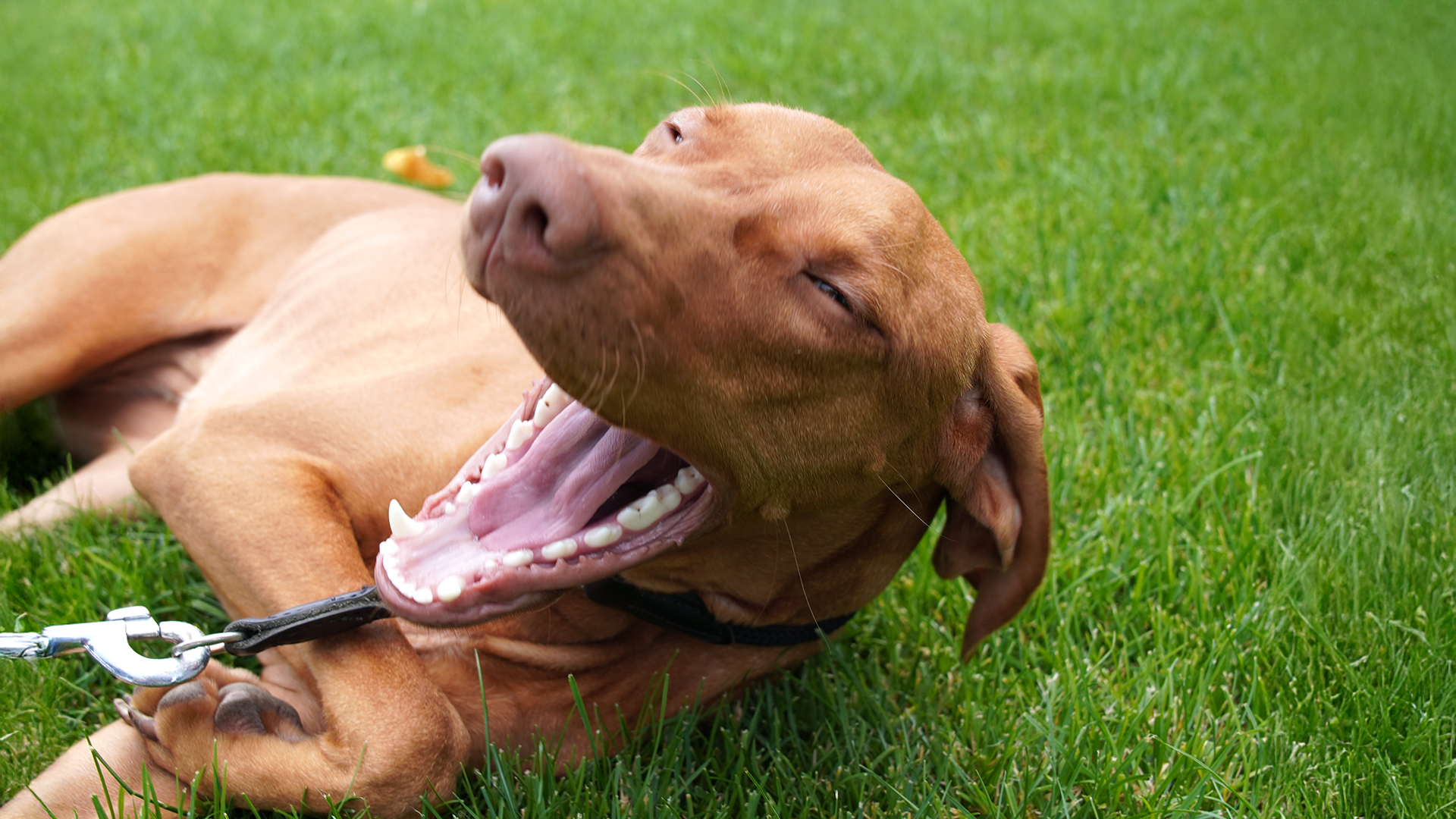
What puberty really is in dogs
Puberty is a phase of hormonal change. Depending on the dog, it begins between approximately 6 and 9 months of age. During this time, many things change simultaneously: hormones, perception, independence, and bonding behavior.
Typical signs include: The dog tests boundaries. It suddenly seems insecure or overexcited. It "listens selectively." Familiar things seem to be difficult again. This phase is intense. But it is temporary.
When does puberty end from a training perspective?
In practice, actual puberty ends in most dogs between 12 and 15 months at the latest. From this point on, dogs are:
significantly more stable
mentally clearer
more responsive
able to take responsibility
By the age of 1.5 years at the latest, a dog is mature enough in everyday life and training to reliably follow rules if the leadership is right. This is consistent with my years of training experience and with what I experience every day outdoors with dogs.
Why then the statement "up to 2 or even 3 years"?
These statements mostly originate from biology or behavioral research. In these fields, puberty is often defined very broadly and mixed with other developmental processes, for example:
final physical development
social maturity
complete brain maturation
However, this mixture is not very helpful for everyday training. A dog can still mature biologically and yet no longer be in puberty.
The crucial difference
I clearly distinguish between three phases:
puberty
Approximately 6 to 12 or a maximum of 15 months
Testing boundaries, uncertainty, hormonal chaos
young dog phase
Approximately 12 or 15 months to about 2 years
No more adolescence, but stabilization, fine-tuning, learning responsibility
Social maturity
individual, often between 2 and 3 years
The character is set, the dog knows who he is.
A 2-year-old dog that behaves in a "pubertal" manner is, in most cases, no longer hormonally driven. Then it's a matter of:
lack of clarity
inconsistent leadership
too much discussion
or rules that were never binding
Not about puberty.
Why this clarity is important
When we excuse behavior as adolescent when it is clearly no longer adolescent behavior, we are taking away the dog's sense of direction. Dogs do not need excuses. They need clarity, structure, and reliability.
Conclusion
Puberty in dogs is real. It is challenging. But it is not endless. By around 1.5 years of age at the latest, a dog is mature enough to be trained. From then on, it is no longer about hormones, but about leadership.