
Why clarity in dog training often feels wrong
One of the biggest problems in dog training isn’t a lack of knowledge.
It isn’t the wrong leash.
It isn’t the wrong technique.
It isn’t the wrong exercise.
Often, the real problem runs much deeper.
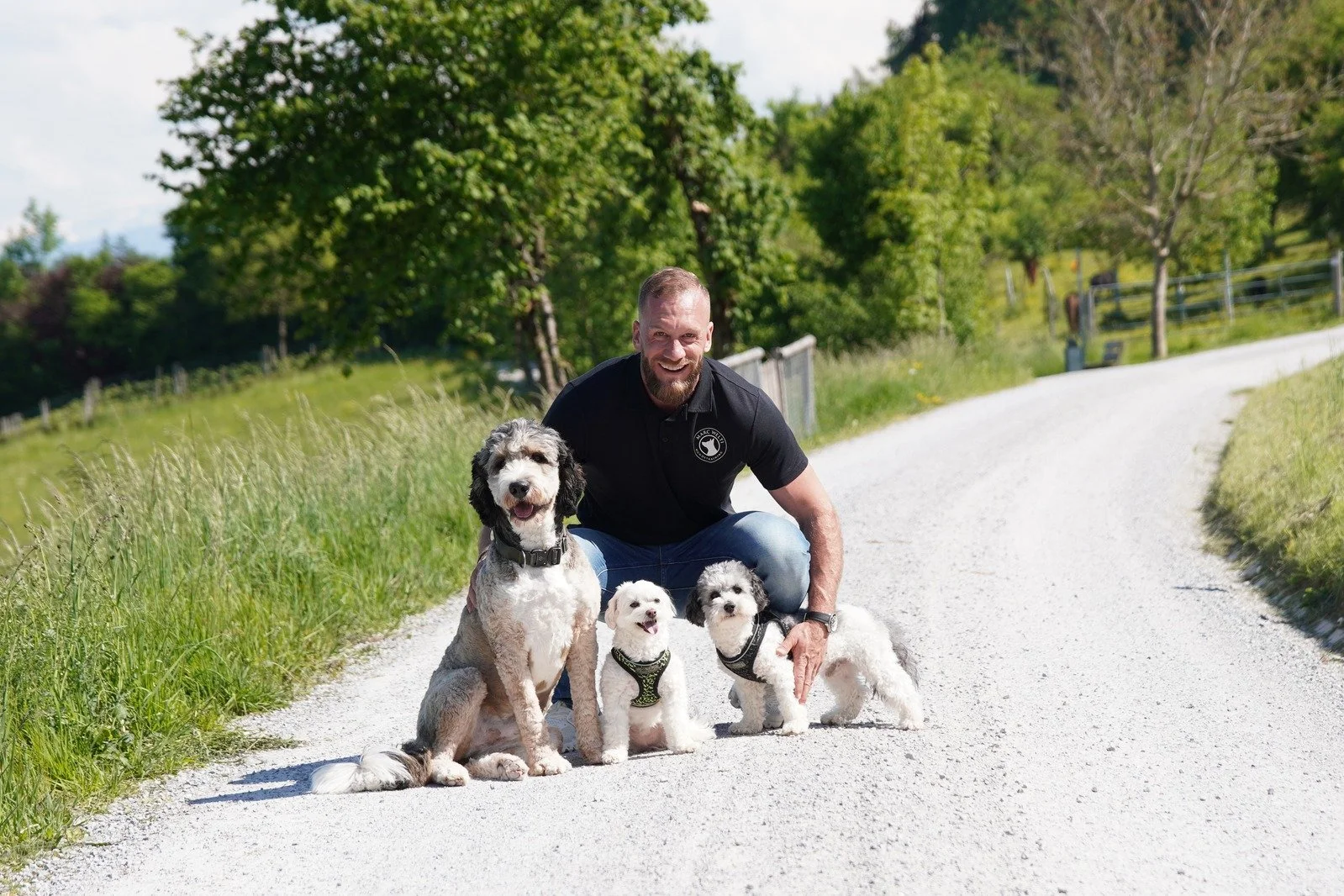
Many people have long known deep down that their dog needs more clarity, more structure, and more consistency. They actually understand that they need to set boundaries. They realize they should be more consistent. And yet they don’t do it. Or only for a short while. Or only halfway. Or only until it starts to feel uncomfortable inside.
That's exactly where the real issue begins.
After all, many people don’t struggle with boundaries because they don’t understand them, or because they are weak or incapable. They struggle with boundaries because their entire nervous system has learned that conformity is safer than clarity.
And that’s exactly what you see in dog training.
Why setting boundaries feels wrong to many people
Some people feel uncomfortable the moment they set a clear boundary for their dog.
The dog is not allowed on the sofa.
The dog should go to its spot.
The dog should follow a rule.
The dog needs to stop constantly arguing, making demands, or pushing boundaries.
And even though people know full well that this boundary would make sense, something immediately wells up inside them.
Guilt.
Insecurity.
Pity.
Tension.
A guilty conscience.
The feeling of being too harsh.
The feeling of being unfair.
The feeling of taking something away from the dog.
This is an extremely important point. Because many people completely misinterpret this inner unease.
You might think:
If it feels so uncomfortable, then it can’t be right.
But often, that’s exactly not the case.
Often, it doesn’t feel wrong because it is wrong.
But because it’s unfamiliar.
Your nervous system confuses clarity with danger
From a psychological perspective, this is a key mechanism.
If you learned early on that you were rewarded for conformity rather than for being authentic, your system stores something very specific:
Maintaining harmony is safe.
Not causing offense is safe.
Pleasing others is safe.
Holding back is safe.
Avoiding conflict is safe.
Setting boundaries is risky.
Encouraging resistance is risky.
Being unpopular is risky.
Not allowing someone to do something is risky.
This often happens as early as childhood. Not always consciously. Not always dramatically. But very effectively.
Perhaps you were praised when you were well-behaved, compliant, and easygoing.
Perhaps there was little room for genuine self-expression.
Perhaps speaking up was met with withdrawal of affection, pressure, guilt, or tension.
Perhaps you learned that you receive approval when you hold back.
Then your nervous system builds a pattern based on exactly that.
And this pattern doesn't just disappear simply because you're an adult now and have a dog. It continues to show up. Even in dog training.
That's why healthy boundaries often feel uncomfortable at first
When someone has spent years putting themselves last, self-respect often doesn't feel natural at first.
Instead, it feels wrong.
If someone is used to constantly adapting, a healthy boundary doesn't feel strong at first.
Instead, it feels selfish.
That is exactly why it is so important to understand this unpleasant feeling properly.
It isn’t automatically a moral compass.
Very often, it’s simply an old pattern.
An old warning signal.
An old internal program.
Your system doesn’t say:
That’s wrong.
Rather:
I'm not familiar with that. Please go back to the old one.
Why this has such a significant impact on dog training
A dog doesn't live according to your good intentions.
It lives according to what you actually project, believe in, and put into practice.
In other words:
If you give in every time your dog looks sad, pressures you, whines, argues, acts cute, or resists, then your dog is learning something very important.
He doesn’t just learn from individual situations.
He learns that your boundaries are flexible.
He learns that clarity only lasts until things get emotionally uncomfortable.
He learns that persistence is stronger than your guidance.
He learns that all he has to do is pull, demand, beg, bark, evade, or act silly until you give in.
And that's exactly where the chaos begins.
Not because the dog is bad.
But because he senses that the leadership isn't stable.
The dog often triggers your old habits
That’s the point many people underestimate.
The dog doesn’t just cause training problems.
It often directly triggers your inner vulnerabilities.
For example:
You set a boundary, and your dog looks at you sadly.
You immediately feel guilty.
You want to assert yourself, but your dog gets restless.
Immediately, you start to feel nervous yourself.
You want to demand calm, but your dog starts to demand something or protest.
You immediately give in because you can't handle tension very well.
You give a clear command, and your dog seems offended, hurt, or frustrated.
Immediately, you start to make excuses or back down.
That's fascinating from a psychological perspective.
Because the truth is, in moments like these, you’re often not just struggling with your dog. You’re struggling with your own conditioning.
With your old pattern of wanting to please everyone.
With your fear of rejection.
With your guilty conscience.
With your inability to let tension settle.
Why Many People Confuse Pity with Clarity
A very common mistake in dog training is that people mistake pity for love.
You think:
If I really love him, then I have to give in now.
If I stand my ground now, I’m being cold.
If I set a boundary, I’m being unfair.
If I let frustration show, I’m being harsh.
But that’s often exactly where the confusion lies.
"Love without guidance doesn't make many dogs more confident—it makes them less so."
"Because a dog needs more than just affection."
"He needs guidance."
"He needs reliability."
"He needs structure."
"He needs someone who doesn't waver at every emotional upswing."
Pity often comforts the person more than the dog.
It temporarily relieves the person of their bad feelings.
But in the long run, it often robs the dog of exactly what it needs.
Namely, clarity.
Why feelings of guilt aren't proof that you're doing something wrong
That’s a very important point.
Feelings of guilt aren’t automatically proof that you’re doing something wrong.
They’re often just a sign that you’re acting against an old pattern.
If you've spent your life learning to conform, self-respect will feel like a guilty pleasure at first.
If you've learned to avoid conflict up until now, leadership will feel difficult at first.
If you've spent your life putting the needs of others before your own sense of clarity, then setting clear boundaries may feel selfish at first.
But especially when it comes to dog training, you have to learn to tolerate these feelings without immediately believing them.
Otherwise, it’s not just the dog that’s training you.
Your old habits will continue to shape you as well.
A dog doesn't need a perfect person. But it does need someone who is sincere at heart.
It’s not about becoming hard.
Not cold.
Not dominant in the human sense.
Not aloof.
Nor is it about suppressing every emotion.
It’s about becoming more honest with yourself.
Honest about what you really want.
Honest about what’s necessary for your daily life.
Honest about where you’ve given in so far out of insecurity, guilt, or a desire to fit in.
A dog doesn’t need a perfect leader.
But it benefits immensely from a person who becomes clearer, more genuine, and more stable.
Why a dog's resistance often immediately triggers your old patterns
When you start setting clear boundaries, your dog will often respond.
He tests.
He protests.
He argues.
He may suddenly become louder, more persistent, or more creative.
That's normal.
But that's exactly where things get psychologically interesting.
Because at that moment, it's not just your dog who reacts.
Your nervous system reacts too.
Many people then feel internally:
Now I’m messing something up.
Now I’m being too strict.
Now my dog is losing trust in me.
Now I’m hurting him.
Now I’m being mean.
But often, something else is actually happening.
For the first time, the dog experiences more reliability.
More structure.
More stability.
More predictability.
Just because there’s tension in the short term doesn’t mean it’s wrong.
Growth often feels like disruption at first.
Why the people around you don't always like the changes you make
This isn't just true for dogs.
As soon as you become more clear-headed, other people often sense it too.
Your partner.
Your friends and family.
Your family.
People who have benefited from your being soft-spoken, compliant, or conflict-averse may not immediately appreciate your newfound assertiveness.
It’s important to understand this.
Because sometimes, in dog training, a person isn’t just intimidated by the dog—but also by the reactions of others.
When someone says:
“Come on, don’t be so strict.”
“Oh, just let him be.”
“Poor guy.”
“It’s not that bad.”
“Then a lot of people will fall back into old habits.”
“Not because they don’t know any better.”
“But because the same old pattern kicks in again:
Don’t rock the boat. Stay harmonious. Don’t cause any trouble.”
Yet real change requires backbone precisely at this point.
Your Dog as a Mirror of Your Relationship with Yourself
That's why dog training is often much more than just training.
It shows you how to deal with tension.
How to deal with guilt.
How to deal with resistance.
How to deal with frustration.
How to deal with your own insecurity.
And above all, it shows you whether you believe in yourself.
Because every time you make a promise and don’t keep it, you’re not just undermining your influence over the dog.
You’re also undermining their trust in you.
And every time you set a clear, fair boundary and stand your ground calmly, you strengthen something within yourself.
Self-respect.
Self-confidence.
Inner reliability.
That is exactly why dog training so often involves working on one's personality.
How to break out of this pattern
The first step isn't to become tougher.
The first step is awareness.
You need to recognize exactly when you start to give in.
When your dog gives you a certain look.
When your dog behaves a certain way.
When your dog protests in a certain way.
When you feel a certain way inside.
Ask yourself honestly:
When do I start feeling guilty?
When do I start making excuses?
When do I slip from clarity into pity?
When can’t I handle the tension?
When am I more likely to prioritize my own comfort than the structure my dog actually needs?
Only when you realize that can you make a difference.
The second step is to endure the uncomfortable feeling without immediately backing down.
Not blindly.
Not harshly.
But consciously.
You may learn that clarity can feel uncomfortable at first, but it’s still the right thing to do.
The third step is to set boundaries in a conscious, fair, and absolutely binding way.
The clearer you become internally, the less setting boundaries feels like a struggle.
And the more it becomes a form of guidance.
What Your Dog Really Needs
Your dog doesn’t need you to always seem nice.
He doesn’t need you to shield him from every frustration.
He doesn’t need you to feel insecure every time he resists.
Nor does he need you to constantly put yourself second to him.
What he needs is something much more valuable:
A person who can be loving yet firm.
Someone who can set boundaries without making exceptions.
Someone who can handle tension without breaking down.
Someone who acts not out of guilt, but out of responsibility.
That's true leadership.
Conclusion
For many people, the problem with dog training isn’t the technique.
The problem is that clarity feels inherently wrong to them.
Not because it’s wrong.
But because their nervous system has been conditioned to adapt, seek harmony, and hold back.
That’s why boundaries can trigger guilt.
That’s why being firm can sometimes feel harsh.
That’s why compassion is often confused with love.
That’s why people break down right when their dog needs them the most.
But this is precisely where the great opportunity lies.
Because when you learn to recognize this pattern, not to automatically believe your guilty conscience, and to stay clear-headed despite inner tension, it’s not just your dog training that changes.
It also changes your relationship with yourself.
And that’s exactly where true leadership begins.
If you find that you keep giving in to your dog in everyday life, feel guilty, can’t set boundaries, or if your dog seems to know exactly how to push your buttons, then schedule a free initial consultation here .
There, we’ll explore together what triggers you emotionally, how your dog affects you, and how you can build true clarity, stability, and reliability.