
Motivation is not reliable
Why discipline is crucial in dog training.
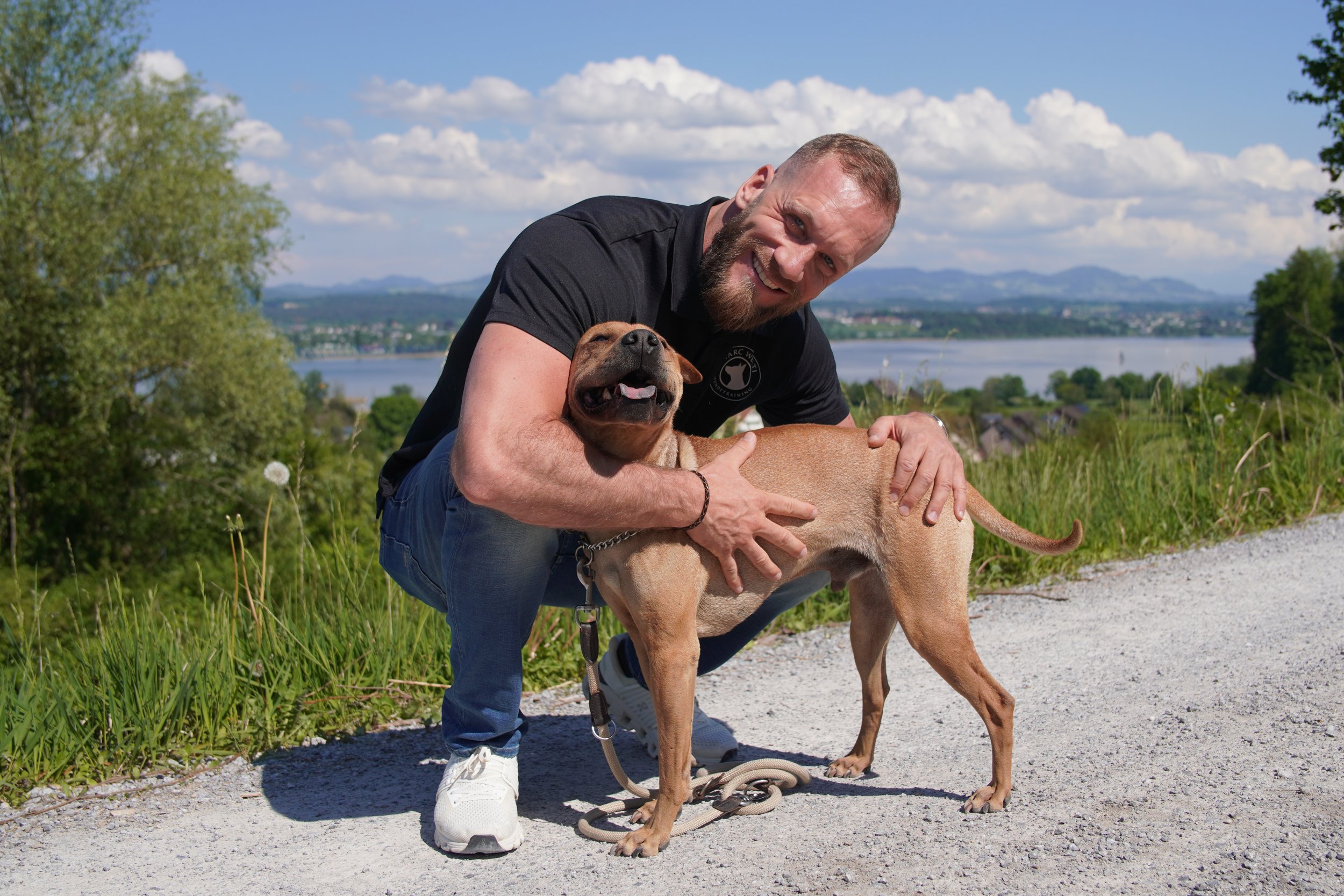
Many people try to train their dogs using motivation. They believe that if the dog isn't constantly motivated, something is wrong.
There is often an idealized image behind this:
the perpetually happy dog that is always wagging its tail and enthusiastically joins in on every activity.
But this image has little to do with reality.
A dog isn't motivated all the time
Of course, there are times when your dog is motivated.
He likes to play.
He likes to work.
He is happy.
But there are also situations where he simply does what he’s supposed to do.
Not out of enthusiasm.
But out of acceptance.
And that’s exactly how it is with us humans.
We, too, don’t go around smiling all the time.
We go to work, even when we don’t feel like it.
We get things done without much emotion.
Without much joy.
Without resistance.
Why should it be any different for your dog?
Motivation comes and goes
If you want to achieve a goal in your life—such as going to the gym regularly—motivation alone isn't enough.
Anyone who exercises regularly knows:
Motivation comes and goes.
No one is motivated all the time.
The people who succeed are those who keep training even when they don't feel like it. Discipline trumps motivation.
What this means for dog training
That is exactly why discipline is one of the most important components of my training.
A dog must learn:
Not doing the things he wants to do
Doing things he might not feel like doing right now
to be present
to take a break
just sit there
to endure
Not because it’s fun right now.
Not because a treat is waiting.
But because now is the time.
This has nothing to do with being tough.
It has to do with self-control.
A dog that is guided solely by motivation will lose focus as soon as that motivation is gone.
A dog that has learned discipline remains calm.
A common fallacy
Many people fail at training their dogs because they believe the dog needs to be constantly motivated.
But the goal isn't to generate lasting enthusiasm.
The goal is reliability.
. . Discipline is sustainable.
Conclusion
A well-trained dog isn't one that's constantly hyper.
But rather the one who cooperates even when the situation is neutral.
Once you realize that discipline is more important than motivation, your perspective on parenting will change fundamentally.
If you want to learn how to teach your dog true self-control—rather than just creating short-term motivation—I’d be happy to guide you through the process.
It all starts here with a free initial consultation.